I once had a hundred thousand dollars in cash hidden in shoeboxes under my bed in a Soviet apartment block in Tallinn, Estonia.
A year before that I had been pawning the guitar my mother had bought me when I was 16 and my Rolex Daytona for drink money in a pawnshop off 42nd Street in New York. I was twenty-seven years old, running on cocaine and alcohol, with a trading floor career in ruins and a family I had abandoned. I had no plan. I had no floor to fall to, or so I thought.
Then I found the floor.
The distance between those two facts — the pawnshop and the shoeboxes — and the trajectory that came after is what this book is about. Not the money. The distance.
Nobody tells you about the dark side of success.
We talk endlessly about the financial side — the returns, the exit, the number. What we almost never talk about is what the exit actually costs. The identity that disappears when the thing you built your life around is sold and the diary is empty and the phone stops ringing. The liquidity event that is simultaneously your best day and your worst day. The morning after, when the money is in the bank and there is nowhere you have to be and the question arrives — quiet, insistent, impossible to ignore — who am I now?
I spent years not answering that question well. The partnerships that exposed the limits of my nature. The last hotel bought as a vanity project and an escape from a failing marriage. The farm in Argentina bleeding money while I played polo and called it a life. The capital eroding faster than I was willing to admit. And underneath all of it, the washing machine in my head running louder with every year I stayed away from the rooms that had saved me in the first place.
The second fall is quieter than the first. It doesn’t announce itself. It accumulates.
My father was the most admired man in our small Illinois town and the most frightening person in our house. He had left Estonia after the war with a suitcase containing six items — two shirts, a pair of trousers, his stethoscope, two silver spoons and forks — and rebuilt an entire life from that inventory through sheer intelligence and will. He became a doctor, became respected, and put those white pillars on the biggest house in town.
And alcohol slowly consumed him.
I watched that happen from childhood and then spent my twenties doing the same thing in different cities with different substances and the same result. The fog my father lived in became my fog. The bottom he never found became the bottom I hit at twenty-seven years old, on a bedroom floor in Westport, Connecticut, with soaked sheets and birds singing outside and a decision to make.
I got on my knees. I said seven words to a God I wasn’t sure I believed in. And I waited for the silence that came back.
Everything that followed came from those seven words and the decision to stay on that floor until the silence arrived.
Two years later I was on a plane to Tallinn with four hundred dollars and a notebook, arriving in a country that had been independent for less than a year. The Soviet Union had collapsed. The rules were being written in real time. Young men in bad suits with brick-sized Nokia phones were trying to build something in a place where almost nothing worked yet.
I was one of them.
But I was on outsider.
Sober, nothing to lose. That was my edge.
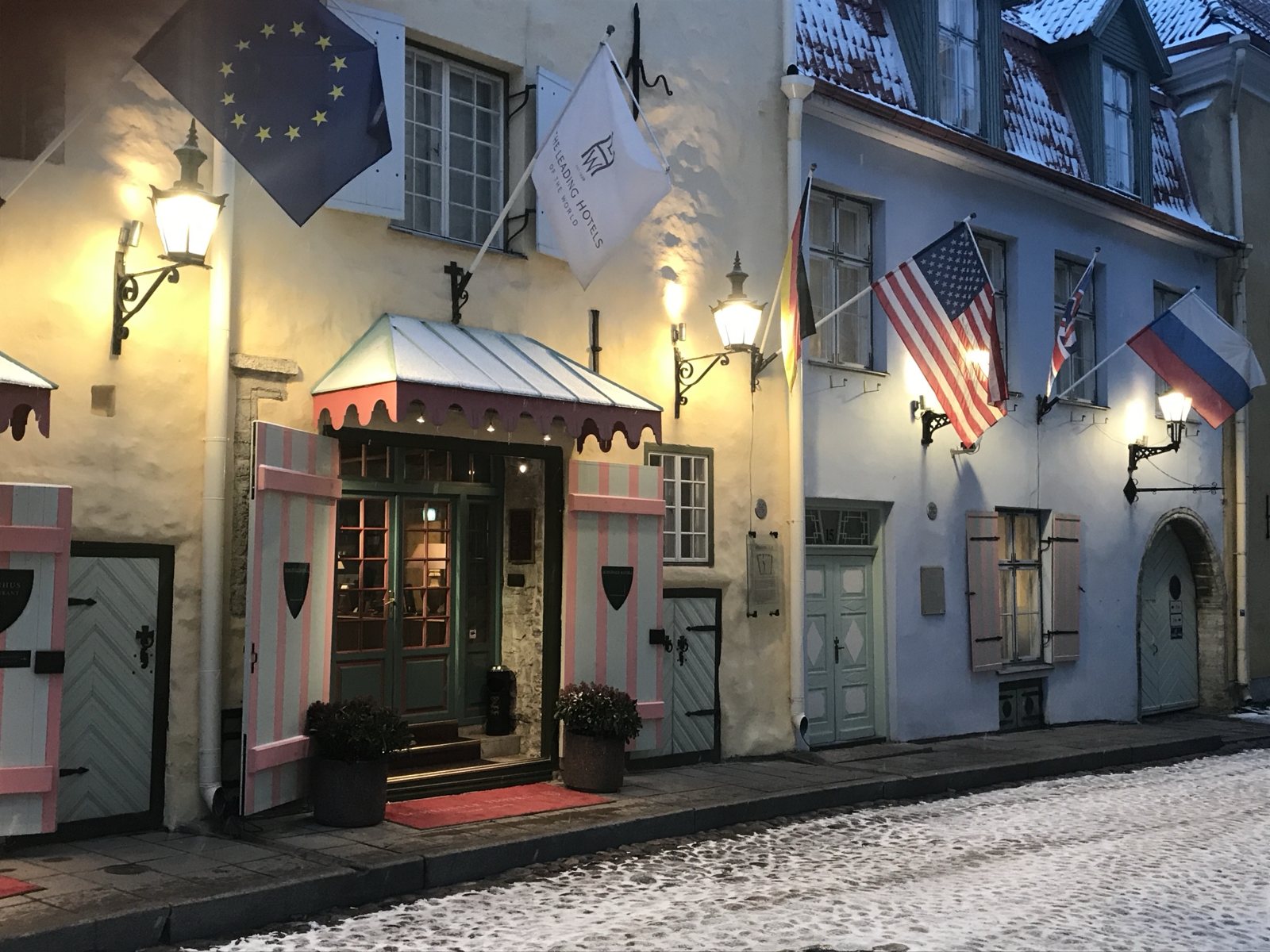
My father had left Estonia with a suitcase and gone to America to build a life. I had come back with four hundred dollars and a notebook and was, without quite planning it, beginning to do the same thing in reverse. I built a real estate business that eventually grew to thirty-five offices across six countries and nearly 650 employees. I built a mortgage company, a portfolio of hotels that European royalty stayed in, and retail shopping parks that changed how ordinary families lived. And in a Forrest Gump moment, I sold everything one week before the 2008 financial crisis destroyed the world around me.
On paper it looked like I had won. Big time.
But the path after that day wasn’t in the plan. 18 years later I had started again — a PowerPoint on a train, trying to get people to bet on a new story rather than the spreadsheet, building from nothing for the second time. I am sixty-six years old and forty years sober and this time the build feels more real; it’s harder the second rodeo, but the clarity is back.
So I am writing this book because the conversation I needed to have in the years after the exit — the honest, unperformed conversation about what success actually costs and what comes after it — was not available to me. It is not available to most founders. We go to the golf course. We sit with our mirrors. We read our press clipping, we look backwards. The we start another deal because stillness is where the questions live and the questions are uncomfortable.
That needs to change.
This book is my attempt to have that conversation in public. It is raw because the story is raw. It is serious because the cost was serious. It is honest because dishonesty, in my experience, is what gets you into trouble in the first place — and what keeps you there.
There is a dog on a frozen beach in Estonia who appears in this book. Wet, mangy, scraggly. A man throws a stick into the dark water — broken ice at the shoreline, the sea cold and very deep — and the dog goes in without hesitation. Swims to the stick. Comes back shaking water in every direction. Waits for the next throw.
Again and again. The cold doesn’t register. The discomfort is irrelevant. He is just doing what he does — showing up completely, committing without calculation, not thinking about the odds.
I have thought about that dog more times than I can count. In Tallinn in 1993, standing on that beach having just been fired and wondering what came next. In London in 2012, sitting in a small Soho flat wondering how I got there. On the train with a PowerPoint and a conversation that would become a business.
Jump into the cold water. Swim for the stick. Keep doing it regardless of the temperature.
That is the whole of it, really. Everything else is detail.
The manuscript sat in a drawer for years.
I’m ready now.